Basic HTML Version































354
NGLESE
RTE E TERRITORI O
A
Work in pairs. Answer the following questions:
1 What would your ideal house be like?
2 Would you like it to be located in an urban environ-
ment, or immersed in a natural environment?
3 What features should there be outside/inside it?
As you speak, make notes of each other’s ideas.
B
Connect to the Internet, look at
the photos of three houses by the
20th-century American architect
F. L. Wright .
1 Do any of them look like your ideal
house?
2 Decide which of the following adjectives
best describe each house, giving reasons:
traditional
spacious
attractive
unconventional
eccentric
ordinary
ostentatious
substantial
airy
economical
horrible
imposing
C
Work in pairs. Read Part 1 about the biography
of F.L. Wright, and then agree on a heading for
paragraphs A-E.
D
Read the text again, and then answer the following
questions:
1 Where did F.L. Wright’s career begin?
2 When did he set up his own firm and what did he design?
3 Focus your attention on the statement “... he opened
the box”? What does it refer to?
4 How did Wright contribute to the solution of low-cost
housing?
5 What is the name an acronym for?
6 What are his greatest examples of his philosophy of
“organic architecture”?
7 What characterised the last years of Wright’s career?
8 Which innovations did Wright introduce into modern
architecture?
E
Read Part 2 and then answer the following questions
1 What did Sullivan state?
2 How did Wright adapt his maxim?
3 Why did he refuse tradition?
4 What was he attracted to?
5 What did he mean by “organic architecture”?
6 What are its guiding principles?
7 Does organic architecture have a fixed style?
8 Which materials did he like best, and how did he use
them?
Frank lloyd
wright
2. Jacobs House, Madison, Wisconsin
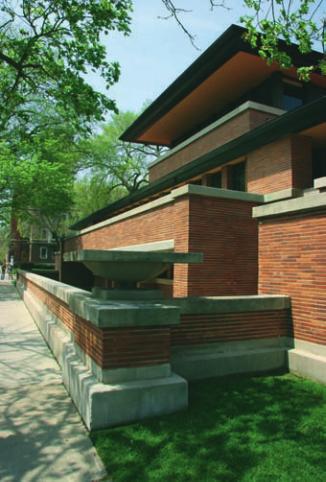
1. Robie House, Chicago, Illinois
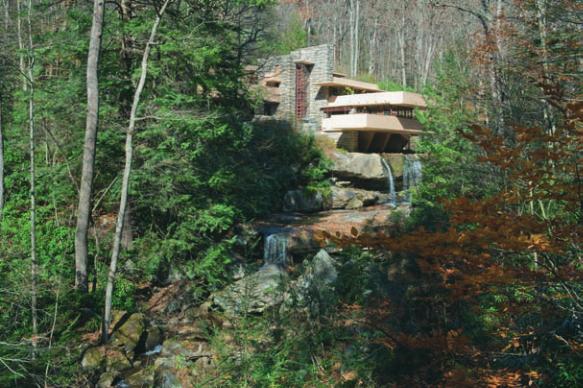
3. Fallingwater, Bear Run, Pennsylvania
Focus on Content
document
online
Sez5_U18_343_357.indd 354
29/12/1